I use Fastmail for my mail service and it was nice that it was mentioned in this article. I'm going to have to add reviewing my post about BIMI to my list of things to do.
Email authentication is evolving, and Ed25519 DKIM keys promise clear advantages over traditional RSA: smaller keys, faster verification, and stronger cryptographic guarantees. But those benefits only matter if mailbox providers actually support the standard. To find out, Red Sift analyzed DKIM behavior across major email platforms to answer critical questions for email administrators: can Ed25519 keys be deployed safely today without risking authentication failures?
Unfortunately, I’m still at a place where I can justify registering a trademark so that people can see my picture in their email.
I miss the days where I thought something like this was only for the super paranoid.
Tor is an overlay network that was specifically designed to protect the privacy of its users. The Tor Network uses multiple layers of encryption and relays in order to protect a person’s location and other potential identifiers, such as an IP address.
Its name comes from the acronym for The Onion Router, a routing system using multiple layers that can get peeled off at each step, like an onion 🧅
*[IP]: Internet Protocol
I have been looking for this link for a very long time! I thought it was taken down for whatever reason and kept kicking myself for not saving it. I think it's a very good read as we start a new year
Near the end of the year, I look forward to two sites that release some amazing articles about web development.
HTMHell Advent Calendar 2024
In 2022, I launched the HTMHell Advent Calendar, which was a great success. Since then, dozens of authors worldwide have contributed fantastic articles on security, accessibility, UX, and performance every year. This year, we’re back again with twenty-four more posts.
When I was in college, I had a web development class where the teacher would start off every session with websites that had questionable decisions about the design. This site seems to be a continuation of that but shows you how to correct it.
This was a pretty nice article about things getting focus and how that plays with accessibility.
In accessibility, “focusable” UI elements are represented by two separate yet equally important concepts: the elements who can be focused sequentially and those who can only receive focus programmatically. These are their stories. Dun-Dun
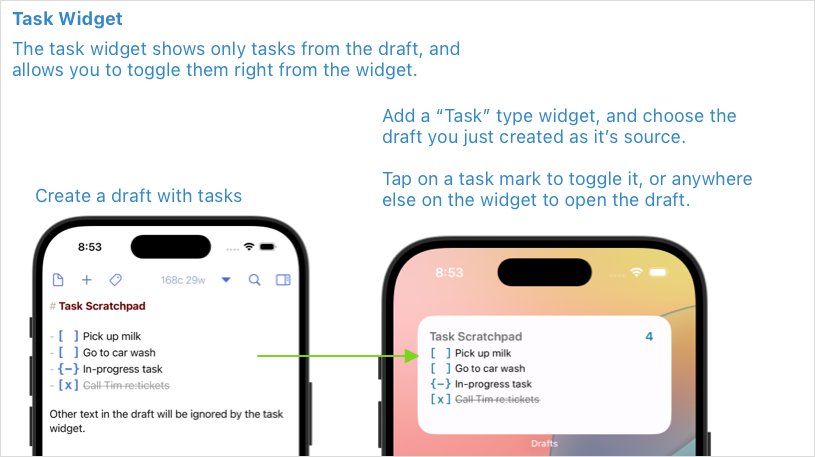
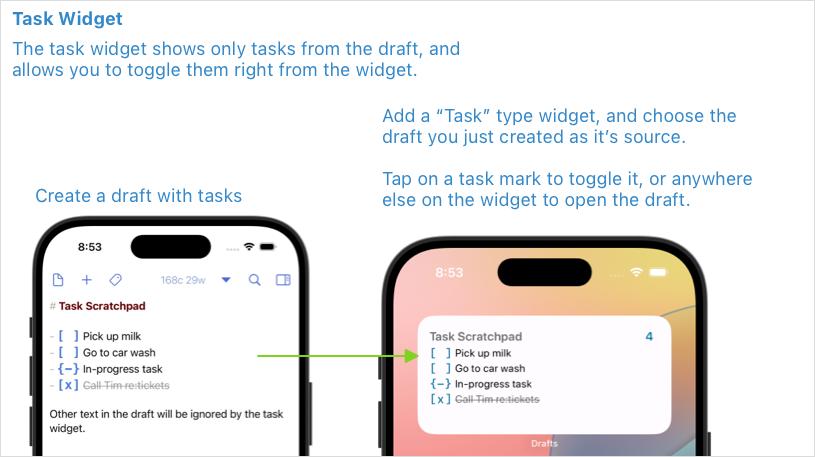
Have transient errands and tasks you don't want to clutter your task manager? A scratchpad draft combined with Drafts’ Task Widget can help. Includes example actions for moving tasks you captured in the scratchpad on to Reminders or Things, too.
This was making the rounds a couple of weeks ago and I wanted to link to it, but it was sitting in the backlog as I was trying to make something else perfect.
I don’t remember what I was waiting for, but I’m hoping that you enjoy it.
So let's talk about monetizing a blog, starting with the most obvious and perhaps easiest avenue: display advertising.
Be sure to tap/click on the image for a good time.
If you EVER, and I do mean EVER see a QR code for anything... not just some things, ANYTHING.
Treat it as a scam, do not scan it, they can easily be covered up with malicious redirects to fake sites to steal your financial details. Direct you to malware sites to try and infect your device.
Treat them all the same... as toxic, potential harmful to your identity and security.
Never trust them... EVER!!!
If you 100% must use one, do what you should be doing at any (ATM) cash machine, check for devices that have been installed by crooks. See if you can peel the code off, not just at the area around the code, but the whole sign... look for anything unusual and if you have any doubts... even if it's 1% doubt... DON'T USE IT
This isn't scaremongering, scammers and thieves are out there every day, placing fake QR codes on signs all over the place. No where is safe from them. The way to win is not to play. Don;t buy into the enshitification of everything, don;t be told that you can ONLY do it one specific way (legally they have to offer more than one way to pay for a service).
There is a _lot_ of content out there. Some of it's news, some of it is propaganda. I hope that this helps you get to whatever you want to read faster.
Text-only websites are quite useful, especially today, because web pages are increasingly filled with ads, videos, and bandwidth-heavy content.
I really enjoy how Leon steps us through the journey of setting up self-hosting as well as giving us his reasons on why he's doing it.
Well, if I was going to do this at all, it was time to do it for real. I decided to set up my own code hosting properly this time, complete with CI/CD runners, all hosted under my own domain name.
Leon even includes some price breakdowns, design diagrams and links to get some more information.
I enjoy and appreciate Brett Terpstra and what he's brought to the internet. I was going over my posts and I don't seem to have ever linked to one of his posts about what he finds on the internet.
Web Excursions are select bookmarks from my travels around the interwebs, because I'm always thinking about you while discovering other people's cool stuff. You mean that much to me. You can see all of my (public) bookmarks on Pinboard, and visit the bookmarks archive for curated lists across the last few years.
We've started a new project which requires heavy, creative theming, so I made a prototype to test some ideas out.
I really like this article as it breaks down the reasoning of why they are doing what they are doing. It has some examples that you can follow along with and leaves me thinking about how I can take this knowledge into my own development.
This article by Schalk Neethling talks about the access portion of accessibility. It's something that I think about for the base portion of my theme and I hope that you'll read it and spread the message.
This got me thinking: how are curly braces used in English today? Many English keyboards, such as the Macbook Air keyboard on which I am typing this blog post, have curly braces as a character you can type with the shift key pressed. If curly braces are on our keyboards, they would have to either have some use in language, or sufficient use as a punctuation in computational contexts?
I can't recall ever seeing these outside of the context of programming.
I keep getting older, and the text size on Daring Fireball keeps staying the same.
I feel this soo much. It's part of the reason that I make the default font as big as it is. I understand that a user might have a default style sheet or setting. I feel that designing for a larger initial font, makes this particular theme more flexible.
Earlier this week, with a spark for building but no particular idea in mind, I started to think about the Linux manual page. Could I serve my blog posts as Linux manual pages? Herein lay an adventure.
This study compares two websites with identical design: the commercial Spotlight template from developers of Tailwind vs the same site with semantic CSS
I found this via Robb Knight's mastodon/website and laughed to myself when I read No Comment.
I've been using tools that help developer things faster for years. It feels like all the time we save accrues interest and we have to payback in other costs.
As you can imagine, we spend a lot of our time working on really, really old books. So why not create a website out of really, really old technology?
A pretty interesting read. It's part of what got me interested in static website generation. Also, came across the word "paean" which I haven't seen in so long that I thought it was a typo.



 Well, if I was going to do this at all, it was time to do it for real. I decided to set up my own code hosting properly this time, complete with CI/CD runners, all hosted under my own domain name.